Web Analytics

Thursday, September 15, 2022

September updates

Hi friends. It's been half a year since my last post. Six whole months since my stem cell procedure in Grand Cayman. So... did the long awaited intervention help? I'm devastated to say that as of now, no. Not even a little bit. 

I hate more than anything to start this off on such a low note, but the last few months have been some of the most challenging of the last decade for me. The only way I can describe my head pain has been just out of control. But I'll get to that.

I'm thinking back to spring and it's sort of a blur. I worked through the recovery protocol from my March procedure. In my last post, I outlined the phases of tissue healing. Here now in month six, I'm closing in on the end of remodeling, when the tissue should be constantly improving to become stronger, functional, and closer to normal. Technically, full healing can take up to a year with peak functionality at 1-2 years, but full transparency: it's hard to feel optimistic at this point. 

I returned to some physical therapy in those following months too to help return some necessary foundational strength and function to my cervical spine. 


 In April, I explored some form of structural integration therapy that didn't go well. It's not worth getting into the details, but suffice to say it was just another exhausting example of a practitioner trying to fit a complex problem into their sellable solution. 

Not long after, I had a few appointments with a new physical therapist with a cranial sacral focus. She uses different manual techniques to access connective, visceral, neural, muscular, and fluid tissue. It's almost hard to believe my body could respond this way because the therapy is so incredibly gentle, but sure enough, it flared me right up. Horrible-electric-mixer-in-brain feeling. It's hard to even describe because it's so much more than pain. If you've been around since the beginning, you know that's exactly how I responded to cranial sacral back in 2013 - it's what led us to suspect a dural tear (the dura is the connective tissue that covers the brain and spinal cord) and check for a resulting cerebral spinal fluid (CSF) leak. That was ultimately ruled out with MRI. 

I also consulted with Dr. Peled (my occipital nerve surgeon) about the possibility of trying another round of blocks to explore whether a frontal surgery was warranted. The pain in my supraorbital region (above my eyes) and temples has just been so, so intense. The problem is that the same level of pain is also widespread. Over the top of my head and down into suboccipitals. I just don't have a great degree of confidence right now that cutting those nerves in front would make a significant impact. And the reality is that even when we've identified damaged nerves, tissues, joints, I have had a favorable response to exactly ZERO procedures I've undergone over the course of 11 years. How is that even possible? So while I'll never be afraid to undergo another surgery, I can't say I'm overly hopeful either.

In July, Craig and I finally made it to the Brain Resource Center in NYC. (Our failed attempt last summer got us as far as the tarmac in Boston.) The BRC is a brain wellness and optimization treatment center. It's run by Dr. Fallahpour, a clinical psychologist and neuroscientist, who uses brain-computer interface technology and neuroscience research to treat a variety of psychological and neuropsychological disorders, including anxiety, depression, ADHD, chronic pain, and brain injuries. 

We're working off the assumption that central sensitization is, at the very least, contributing in some way to my intractable chronic head pain. What that means, in a nutshell, is that when you're in chronic pain, the parts of your brain that experience that pain undergo physical changes. As more and more neurons are recruited, those pain processing regions become hypersensitized (essentially "better" at feeling pain). I guess you could think of this as the really shitty part of neuroplasticity, or the brain's ability to change and adapt as a result of an experience. Keep in mind, this isn't referring to the "mind" changing in some conscious way, rather, literal structural changes occurring in the brain. On the flip side, if the brain's structure can be changed through some sort of therapeutic intervention, central pain can be disrupted. That's really the idea behind this sort of treatment. 

We spent a few days at the Brain Resource Center. The first day was the most "demanding" on this old noggin of mine. She certainly doesn't work like she used to, I'll tell you that much. I underwent a comprehensive brain map assessment (quantitative electroencephalography) to measure the electrical activity of my brain while engaged in a series of cognitive tasks. That gave them a visual representation of the parts of my brain that were over or underactive. And then based on those patterns, they designed a neurofeedback program that was intended to help me learn to rebalance my brain activity and ultimately/hopefully decrease my pain.

My brain map results showed two primary areas that are underactive. The first is my anterior cingulate cortex, likely due to pain and persistent attention to pain. This part of your brain is what directs and manages attention. So the more "tuned in" I am to my pain, the more that area physically grows. I work so hard (so f-ing hard) to stimulate my body and mind in ways that detract as much as humanly possible from my headache (example: the importance of my workouts) but emergency room level pain is just straight up impossible to "ignore." The second part was my sensorimotor cortex, which is involves in pain perception. 

Sooo... yes, brain map checks out. 

In terms of my cognitive performance tests, I scored in the normal range but my visual memory was lower. That's to be expected given how chronic pain affects memory. It also explains why my not-even-3-year old legitimately kicks my ass in her memory card matching game on a daily basis. 

I spent the next couple of days there doing the actual neurofeedback treatment and left NYC with a computer to take back home to Arizona. I spent the next month and a half doing virtual neurofeedback treatments. From Monday-Saturday, I would spend Ryan's afternoon naps with headphones on and electrodes on various locations on my scalp. My response was....bizarre. In the first full week, I had several days in a row of lower-than-normal pain. That was a REALLY big deal. We were all super encouraged. Then, things took a turn. For the next 6 weeks, every day was worse than the last. My pain intensity was reaching new highs and staying at those levels for new lengths of time. Truly terrifying. Dr. Fallahpour was working to tweak the protocols of my treatments and not quite understanding why my brain was responding this way. He explained that in some complex cases, it's not uncommon for the brain to go through an initial "resistance" but that things typically stabilized much sooner. I knew it was important that I gave this a fair shot, but ultimately, we all decided I needed to stop. 

A separate potential treatment that we'd initially discussed with Dr. Fallapour was TMS, or trans cranial magnetic stimulation. TMS therapy involves using a magnetic filed to stimulate underactive neurons in specific parts of the brain. It's most commonly used (and FDA approved) for mental health conditions like depression, anxiety, and even certain addictions. There's also research supporting its use in the treatment of chronic pain (though not FDA approved). Back in 2014, my Mayo neurologist, Dr. Dodick, had me try a handheld single pulsed TMS device that he was using in a study on migraines and cluster headaches (a study I didn't qualify to participate in but he was kind enough to let me take home a unit to try). Unfortunately, the single pulsed TMS didn't help me but it's also much different than regular TMS, where you're getting something like 50 pulses per second. 

TMS Therapy is a commitment - patients typically undergo treatment for a minimum of 5 days per week for 4-6 weeks. Similar to neurofeedback but I would obviously need to be in office vs remote. So if I do try it, I'll need to wait until Ryan starts school later this fall. I do think it's worth a shot, but I'd be lying if I said my response to neurofeedback wasn't a real blow to my already compromised mental state. 

While in NYC, Craig and I made two more stops. (And walked I think 50 miles?) The first was another neurologist who Dr. Fallapour had recommended we see. Dr. Mauskop  is the director and founder of NY Headache Center. We were grateful that he was able to squeeze us in on such short notice, but I wouldn't say we came away from the appointment with any novel insights. He agreed my pain is a result of central sensitization and supported my treatment path at the Brain Resource Center. Conversations like these are so frustrating for me. On the bright side, there's an element of validation when doctor's "agree" on something. But it can also feel like what they're agreeing on is "we don't know." It can just feel like gut punch reality check that nobody - not even the best of the best - knows how to really and definitively help me. 

Our second stop was a visit with Dr. Dodick, who left Mayo last year to become the medical director at this really incredible concierge medicine clinic that is basically bringing together the world's leading medical minds + cutting edge science and technology with a vision of ultimately democratizing access to preventative medicine on a global scale. (He is just a hell of a doctor). He gave us a tour of their facility and we had a chance to catch up on all that's been going on since I last saw him.

He gave me the name of a neurologist at Mayo he'd want me to see since I do need to reestablish with a new one there. (I've since made an appointment with Dr. Green for December). We also chatted about some pharmacological options that I'm waiting until I'm done breastfeeding to pursue, including monoclonal antibodies. These are human-made antibodies (proteins) that bind to other proteins in your body. In migraine patients, these medications attached to calcitonon gene-related peptide (CGRP), which is a protein that can impact migraines by widening blood vessels in the brain. He also told us about new research into microdosing with psilocybin (i.e. magic mushrooms) and lysergic acid diethyalmide (i.e. LSD) to treat migraine and cluster headaches. Again, I'm not a typical "migraine" patient, but without the luxury of a meaningful diagnosis, I just can't afford to leave any stone unturned. 

Let's see. What else...

In late summer, I found myself reading more and more about CSF leaks. Not a new topic for me - remember I said we had ruled out a leak back in 2013? I had mentioned Dr. Scali in my last post - the researcher who had first reported the myodural bridge (the tissue connecting the suboccipital muscles and cervical spinal dural mater) back in 2011. He had just recently published and kindly shared with me his manuscript titled The relationship between the myodural bridge, vertebrodural structures, and idiopathic cerebrospinal fluid leaks in whiplash injuries. I became convinced that there just has to be something going on with my CSF that explains not only my response to cranial sacral therapy but my lack of response to...virtually everything else? I scoured the internet reading story after story of CSF leak patients who didn't fit the classic symptoms of a leak: orthostatic headache (meaning the pain is severe when upright but disappears when lying flat), clear fluid leaking from nose or ear, etc. 

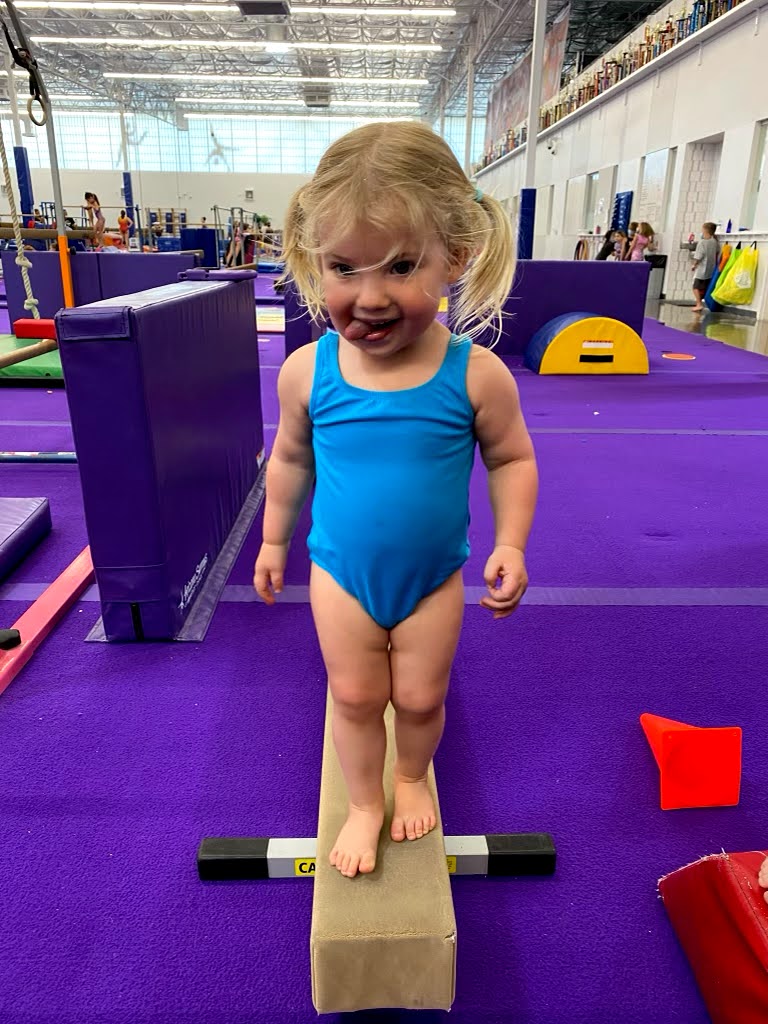
I contacted a neurosurgeon at Cedars-Sinai, Dr. Wouter Schievink, director of the Cerebrospinal Fluid Leak program, who I had learned was the go-to guy. I compiled a decade's worth of medical records - no small feat - and mailed them to Cedars. He would review them (free of charge, which is so kind) and let me know if an in-person visit was necessary. Six weeks later, I was leaving a Mommy and me playtime at a local gymnastics gym. I buckled Ryan in then did that thing that all parents do where you check at least two things off your day's to-do list in the walk from the backseat around the trunk to the front (IYKYK). I had an email from Dr. Schievink in my inbox. I held my breath as I read the words. "I see no evidence of a CSK leak." FUCK. I felt that familiar lump in my throat as I fought to hold back tears. 

Don't get me wrong. It should be a relief to know I don't need a epidural blood patch or another neurosurgery but at this point I am just so, so, SO desperate for an answer. 

A few months back, I had scheduled an appointment with a local neurologist, Dr. Rau, who's a member of the Spinal CSF Leak Foundation's advisory board. Her name had come up in some of the online CSF leak groups so I got on her calendar at the soonest availability, which is October. In his email, Dr. Schievink noted that she's an outstanding headache doctor and very knowledgeable about CSF leaks, so it of course never hurts to get another opinion. He also mentioned that most spontaneous CSF leaks are located in the thoracic spine (most of my imaging has been cervical).

So. 

That's kind of where I'm at right now. Many days (and nights, unfortunately) are brutal. Others are more manageable than others. As always, there's no real rhyme or reason to it, which is just a real mind fuck. (Sorry, I just googled a synonym for "mind fuck" but it turns out this is the best way to communicate the feeling). I try to stay focused on what I can control. My routine and environment are a big part of that. But unfortunately, they're not enough. The majority of mornings, I wake up with a vice grip around my head. Drills going through my temples. A deep and unrelenting ache into my eye sockets, across my forehead, and over the top of my head. The feeling like someone has taken a baseball bat to the base of my skull. And that, friends, is how my day starts. I work out first thing because feeling stiff seems to just take things from worse to whatever is worse than worse. And then I cold plunge. From there, it's full steam ahead because it's the only option there is. The second Ryan is down for her nap in the afternoon, I'm back in bed with my ice packs. When I sleep at night, it's not uncommon for me to cycle through 6-8 of them before morning. 


Chronic pain weaves this complex web through every facet of your existence. And with every passing hour, day, week, month, and year - you feel more tangled in it. Trying to find the balance of living and enjoying life while constantly and carefully monitoring where and how I spend my energy in order to not suffocate from physical pain is ... exhausting, consuming, depleting. And also just my reality. 

Just last weekend, Craig, Ryan and I grabbed an early lunch at a local fast casual restaurant. We arrived just after they opened at 11 am and were quite literally the only people inside. But the music from their speakers was loud.  I had already woken up with high pain, but by early afternoon, the spike was just out of control. Should I go to the ER right now? Their migraine infusions have never helped me. So I don't go. 

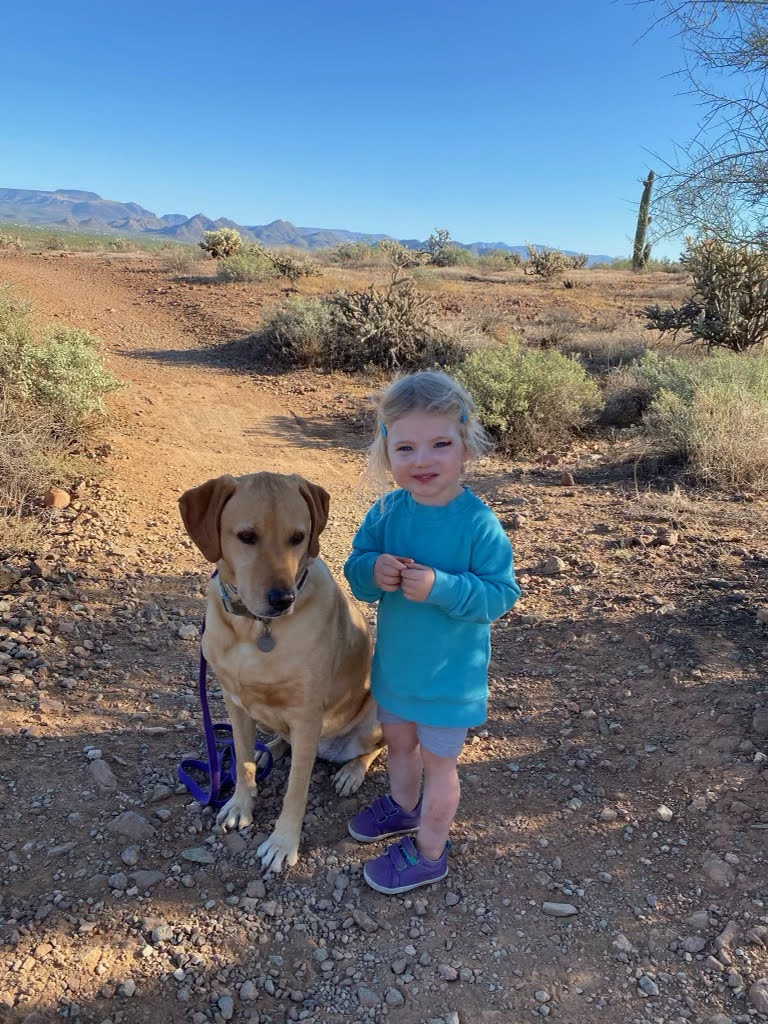
Despite all that bullshit, I whole heartedly believe that the worst thing that someone in chronic pain can do is exist solely as a person in chronic pain. So I lean in with all my might to every other part of my life. Mostly, my role as Mommy. I soak up every waking moment with Ryan. We play, we read, we cook, we ride bikes, we chat, we swim, we color, we do science experiments, we run errands, we go on adventures, we do nothing, we do everything. And I am just so grateful to have this fleeting time with her. Parenting may be hard work, but for me, motherhood is not the struggle. It is the escape. And if my eyes don't well up every time she puts her hand on my arm and asks me how my head is doing..  Just this morning Craig stood behind my chair at breakfast to rub my neck for a few minutes. No words had been spoken to her about the morning I was having but Ryan looked at me and in her sweet, gentle voice said "Mom, I'm sorry you're not feeling good."  


Craig and I have also spent the last year writing a children's book, which we're currently in the process of publishing. We are so excited about this book. It's been quite a learning experience and a real labor of love. Stay tuned for more on that! 

I'll wrap up this already-too-long-of-a-post with a final thought. I recognize that it's hard to support someone battling pain the way I am. Of course it's never easy to watch someone you care about suffer, but the support system protocol is a little more intuitive following an acute injury or recovering from a surgery, let's say. But a random Tuesday afternoon in the 132nd month of their headache? There's no handbook for that. (Although if there was, it'd be because my husband wrote it.) I'm so lucky to be loved and cared for so hard by Craig. He supports me in every possible sense of the word - in ways you can't possibly know exist unless you've endured something like this. But I also realize that when you don't know what to say to someone who is suffering, the path of least resistance is to say nothing at all. I get that. So I'm incredibly grateful for the people in my life - some I know well, and some hardly at all - who make the effort to overcome the discomfort or uncertainty of saying the "right" thing and just say something. Please know how much I appreciate you. 


Monday, March 21, 2022

Regenexx Cayman Update

Friends! I have EXCITING news!

As of last Friday afternoon, my mesenchymal stem cells...the ones that were aspirated from bone marrow in my pelvis in November of 2019, cultured, and cryopreserved in a lab on a Caribbean island for the last 2.5 years...are INSIDE my body. Inside my body getting to work to heal and repair damaged tissue that (fingers crossed) will ultimately help my head pain. 

Before I get into all the details, let me take a step back.

Way back in fall of 2018, Craig and I traveled to Colorado to see Dr. Centeno, founder and chief medical officer of Regenexx. Regenexx is a world leader in the field of orthopedic regenerative medicine based on scientific publications (Regenexx physicians have published over 44% of all orthopedic stem cell research) and is arguably the world's most advanced platform for in-office interventional orthobiologics. Dr. Centeno diagnosed my damaged facet joints via physical exam, MRI, digital motion x-ray, and x-ray guided blocks. He injected my facets with a low-dose cartilage-friendly anti-inflammatory + anesthetic, and could see it leaking straight out of the joint capsules. The damage was obvious. 

(Here's a little visual reminder of what the facet joints look like)


To help my facets, we started by injecting PRP (platelet-rich plasma therapy) into those joints, which yielded no relief. 

At that point, treatment with Regenexx was paused for a bit while I began the journey that is fertility treatment. They were resumed shortly after giving birth to Ryan. In November 2019, when Ryan was just 7 weeks old, the three of us flew to Dr. Centeno's Regenexx clinic in Grand Cayman. The reason we decided to skip a stem cell procedure in Denver and head straight his clinic overseas is because...

The procedures he performs in Colorado are same day (Regenexx SD), meaning the cells must be extracted from the body, cultured, and reinjected into the body all in the same day. Anything beyond that, and the FDA classifies those stem cells as a manufactured drug. In Grand Cayman though, they're not legally bound to the same time restrictions. Regenexx-C is able to culture those cells for an extended period of time. After the cells are extracted from the bone marrow aspirate, cell biologists culture-expand your stem cells, closely monitoring their health and growth rate. The end result yields up to 1,000 times the number of stem cells compared to other procedures. Once the culturing process is complete, samples are sent to an independent lab for sterility testing and karotype analysis (to ensure the cells haven't acquired any genetic abnormalities during the process). 

It's essentially the gold standard of stem cell treatments. And given the complexity of my condition and considering that either treatment is a huge out of pocket expense, it's just always made more sense for us to bypass the same-day U.S. procedure and go straight for the one that has the greatest chance of helping me. 

So if you've been following along for some time, you know that I had my BMA (bone marrow aspiration) in November 2019 and was scheduled to fly back in March 2020 for reinjection. Because you are a resident of planet Earth, you also know what happened in March 2020. Travel shutdowns to the island happened literal hours before our flight. Our suitcases were packed at the front door when we got the phone call. It was devastating. Of course at the time, I don't think anyone could have predicted it would take another 24 months for restrictions to lift. Grand Cayman is such a small island. Despite their local economy's reliance on global tourism, they couldn't afford to let Covid in. 

When we finally got the green light to book this trip, the island was in a phase of reopening that precluded those unvaccinated from entering (even children who are not yet eligible). Since that meant Ryan wouldn't be coming, Craig and I decided that it made the most sense for the two of them to stay home while my parents would fly in from Massachusetts to meet me. 

Back in February, Grand Cayman entered their next phase, allowing unvaccinated children to enter with their vaccinated parents. But between my treatment schedule and recovery time, it still seemed (and was) a heck of a lot easier for Craig and Ryan to stay behind. For Ryan, eight days without Mommy was....drumroll...a total breeze. Hah! So much for all of my worrying. I think it helped that we've been planning and talking about this trip for so long. And Ryan is just so aware. She understands that my head hurts and that I see doctors who try to help me feel better. She always asks, unprompted, how my appointments go. Sometimes at bedtime, she uses her little hands to give me "neck massages." And she understood how important this trip was for our family. 

Looking back on the last two years, I'm able to appreciate the gift of time a little more. My most recent surgery in November 2021 (my third occipital nerve surgery, if you're keeping track) was 200% the right decision to make. Dr. Peled cut both my right and left lesser occipital nerves. I'd already had those nerves cut in a previous surgery, but this time around, he tackled an aberrant branch of those nerves - branches not present in every patient (about 10% he estimates) and I'm so glad we took the chance a second time. 

After going on eleven years of this headache, I've reached a point of knowing that a cure is not and never will be a silver bullet. It's not that I don't believe better days are possible (because I do), but I know that solutions don't come packaged neatly with a bow. Relief is multifaceted. One treatment...one procedure...one therapeutic journey, gives the next one a fighting chance. It's also one of the most exhausting realities of battling chronic pain - the work you put in today doesn't always make tomorrow easier. But it might give legs to the work you put in tomorrow (or the next day).

Four months post op, I've definitely experienced a positive change. The "hot spots" I could pinpoint with my fingers are completely gone. Actually (snip snip) gone - those were my angry lesser occipital nerves! That's huge. Aside from having some time on my side, I've also been working with a physical therapist to strengthen my deep neck flexors. To prove my point above, these are really basic DNS exercises I've done time and time again over the last 6 or 7 years post C1/C2 fusion and craniectomy. But for the first time ever, they seem to actually be making a difference.


This third video in particular shows how engaging my deep flexors helps take the load off my overworked erectors, ideally improving the overall mobility and function of my cervical spine. 

As far as the redness/blotchiness you see on my neck, I have no idea. It comes and goes. We think that's the complex regional pain syndrome (CRPS) I seem to have developed over the last few years. 


So great progress but the relief hasn't translated as much as I would have hoped to the rest of my head pain - still suboccipital but primarily frontal/temporal (i.e. the holy shit my head is going to explode kind of pain), but I'm hopeful that this week's treatment can be a big step forward. 

I've consulted with Dr. Centeno over the last year so heading into this trip, we knew some definite reinjection sites, but the final treatment plan wasn't set in stone until I met with him in person this past Tuesday. 

So here was the week...

We flew in to Grand Cayman on Monday. The next morning was the start of Regenexx-C Phase 2. I needed a fresh blood draw three days prior to my reinjection to collect platelet lysate (PL), which was needed to grow my cells. My stem cells themselves have been cryo-preserved at their biologic age but too much time had elapsed for PL since my blood was last collected. 

Then I sat down with Dr. Centeno to go over our plan of attack. We discussed the relief I've experienced from my last ON surgery and reviewed some imaging. He performed a physical exam (including diagnostic ultrasound). We had quite a bit to work through because I have also been dealing with some chronic hip issues that we planned to treat. Sort of separate...but also sort of related to my head. I have a history of labral tears and moderate osteoarthritis in one of my hips. Both were surgically repaired over a decade ago but one has become increasingly problematic over the few years and hasn't responded well to physical therapy and some different interventional procedures (including PRP). The mechanical dysfunction from my head down my spine and beyond seems to only create more problems as time goes on. 

The final reinjection plan was:

Cervical spine: C0/C1 (right), C1/C2 (left), C2/C3 (bilateral), myodural bridge* (see note below on MDB)

Lumbar spine/SI joint: sacroiliac ligaments (bilateral), interspinous and supraspinous ligaments, iliolumbar ligament, QL tendon (left), greater tronchanter, multifidus, SI joint (left), and S1 nerve. 

He also injected tendons and ligaments in my right knee, which have recently become affected by that Si nerve irritation. Ugh. 

Dr. Centeno also pointed out what appeared to be a possible cyst of some kind (see that solid mass where his pen is pointing?) that could be compressing my third occipital nerve. If it was a fluid-filled cyst, his plan was to drain it, but it ended up being scar tissue. The unfortunate price I'm paying for having four surgeries in that area. Hopefully, some of what he injected will have a positive impact on that space.


*I've mentioned the myodural bridge before, but it's not a very commonly talked about structure (even for those of us who live in the world of upper cervical injury), so here's a recap. 

The MDB is the connective tissue connecting the suboccipital muscles and cervical spinal dura mater (remember that the dura is the outermost/toughest/most fibrous membrane that covers the brain and spinal cord). This soft tissue bridge anchors the spinal cord during passive and active cervical spinal movements. It was first reported in 2011 by Dr. Frank Scali. 

And in a very random turn of events (thanks Jeff!), I ended up speaking to Dr. Scali on the phone last Friday (actually just hours before my reinjection). My brain's no where near smart enough to pick his, but we did have a really interesting conversation. He basically lives and breathes upper cervical anatomy and the MDB (technically bridges, as he explained to me) is a major focus of his research, including their role in a dural tension monitoring system to prevent dural infolding and maintain patency (opening) of the spinal cord. (This also impacts cerebral spinal fluid flow.) And it makes sense that hyperflexion extension injuries (aka whiplash aka riding my bike into a tree) have the ability to send a damage those bridges. 

As someone who tries to the best of my (limited) ability to grasp these concepts simply out of desperation for my own health, I'm really appreciative to Dr. Scali for taking the time to chat with me. 

After Tuesday's appointment, we had some downtime until Friday's procedure. And hey, there are worse places to have downtime. My parents and I relaxed on the white sands of Seven Mile Beach, swam in salty, crystal clear, turquoise water that is the perfect temperature to lose track of time in. We ate some incredible meals (there's no shortage of healthy options), and went on an epic excursion. We snorkeled over coral reef, stopped at a sandbar where we hung out in waist deep water with stingrays, and explored Starfish point. 10/10 recommend! 


On Friday morning, I was back over at the Regenexx clinic for another blood draw. This blood was used to prepare my cells for reinjection. And by Friday afternoon, it was GO time! 

I was under conscious sedation for the reinjection, so about 10% aware and 90% out of it. I know the procedure lasted quite a while just because of the number of injection sites (and getting everything set up under x-ray guidance takes time too). I remember feeling a bit of discomfort but overall, compared to what I've been through, it was a piece of cake. The only rough part of the whole ordeal was the nausea from the Oxycodone a few hours later. It was one and done on the heavy pain killer for me (I never tolerate them well) and luckily, I didn't need them anyway. Post-reinjection pain and discomfort have been quite minimal. 

What now?

The first few days of recovery is a balance of R&R (including use of an infrared heating pad) with light movement, including some stretching and mobility work along with walking up to 30 minutes or so. This morning, on our way to the airport, we stopped back at Regenexx for my final appointment. Dr. Centeno injected PRP into my knee and hip this morning, which will help with healing. (These post procedure injections aren't part of the upper cervical protocol.)

After a Regenexx-C procedure, tissue healing progresses through 3 phases. 

1. Inflammation (week 1): when other healing cells are being recruited to the area to begin the healing process 

2. Proliferation (day 4 to week 6): when collagen and the building blocks for the injured tissue are being laid down 

3. Remodeling (week 2 to 3-6 months): when the tissue is constantly improving to become stronger, functional, and closer to normal

I'll resume physical therapy when I get home and gradually return to normal activity over the next few weeks. 

Full healing can take 6-12 months for stem cell procedures and data outcome suggests peak functionality at 1-2 years after Regenexx-C treatment, but Dr. Centeno told me that I should have a good sense of its outcome over the next few months. 

So there we go! With what felt like never ending obstacles standing in the way, I can't tell you how good it feels to be on the other side of this procedure. Now just one more flight to go to get home to my babies. 

These photos just needed a place. Taken the day before my departure - Ryan's first (balance) bike race...she crushed it!


Monday, November 22, 2021

Four weeks post-op

A quick update from my last post in July. Did Craig and I make it NYC for my brain scan? We came close! We were visiting my family in MA at the time, prepared for our first overnight from Ryan. We drove to the airport, we boarded the plane, we sat on the plane for two hours, the flight got cancelled due to extreme weather, we got off the plane, we drove home. Hah. So we are still working on that. 

Also, I don't have any real update on my stem cells. We're hoping Dr. Centeno's clinic in Grand Cayman will be able to reopen in the spring and we'll finally get down there for re-injection. 

Now jump ahead. This week, I'll be four weeks post-op. You didn't think I would make it a whole year without going under the knife, did you?

After our trip to San Francisco in early October to see Dr. Peled, I decided it was worth trying a third occipital nerve surgery. This time, Dr. Peled would be targeting both my right and left lesser occipital nerves. If you're keeping track, he had already decompressed both during my first surgery with him in 2017 and had gone back in to cut the left during my second surgery a few months later. My decision to move forward with this latest procedure was based on the temporary (diagnostic) relief from the nerve blocks he performed this fall. But why hasn't this relief I seem to get from the blocks translated to lasting relief from previous nerve resections and excisions? A valid question.

As I mentioned in my last post, Dr. Peled had explained to Craig and I that there was a small but entirely plausible chance (something he sees in about 10% of patients) that I could have an aberrant lesser occipital nerve branch located next to my trapezius muscle (instead of behind the sternocleidomastoid, where it's traditionally found). Nothing is a guarantee, of course, and I can understand how the thought of a somewhat exploratory surgery seems....aggressive? But the reality is, until you are living and breathing this pain every waking and sleeping moment of your life for over a decade, you just can't fully appreciate what I would do to feel relief. Before every surgery or procedure I've had, I'm inevitably met with reactions from friends and family that go something like this: "Oh I'm so sorry you need another surgery." I understand the knee jerk sentiment, but please don't ever be sympathetic toward's someone's hope. Just say whatever you think you could that can give them more of it. 

Between COVID and a toddler at home, traveling for medical procedures is a little extra challenging these days, but thanks to my mom, Ryan was in the best hands while we Craig and I were in California. Now, almost a month later, she tells us on a daily basis "I missed you when you were in San Francisco." Cue heart melting. 

Anyway, our trip was short as we could make up. Out on a Tuesday, pre-op on a Wednesday, surgery on Thursday, post-op on Friday and straight to the airport home. 

Surgery took a couple of hours but I came out of it relatively comfortable, as is typically the case. Prescriptions filled as always but no meds needed to control surgical pain. And most importantly, we were so relieved to hear that Dr. Peled had indeed found (and cut) those aberrant branches on both the left and right sides. 

It's an incredibly validating feeling to know there was some clear damage to those nerves. Now we just wait, heal, and pray to every higher power that a reduction in pain will follow. Recovery from these surgeries can be a bit of a rollercoaster. Everyone is different, of course, but it's not uncommon to experience a "honeymoon phase" in the first few days post-op, as everything is pretty numb. Then the nerves start waking up and surrounding nerves tend to get a little angry, going to into overdrive to take over the job of their compromised neighbors. This phase can last weeks (sometimes months) but Dr. Peled has reminded me that the 3-6 month period is generally when the most lasting relief is felt. Patience, patience, patience. 

Here's a look at my incisions the morning after surgery. 


So how's my recovery going? Well, see above. I'm optimistic (I have to be) but this last month has been really challenging...no way around that. The actual spots where the nerves were cut feel decent, but pain at the base of my skull, over the top of my head, deep into my temples, over my eyes, and across my forehead has just been so intense and unrelenting. At times, unbearable. Then again, what does unbearable even mean when not bearing it is simply not an option.  

I have to take it easy from working out for at least another couple of weeks, but in the meantime I'm able to continue my daily walks and have gotten back into my early morning cold plunges in an attempt to help regulate my nervous system. 

I've been trying to get into a more consistent breathing exercises routine too, but it doesn't come easy to me. The voice I'm following along to is telling me to focus on my inhale and exhale. To be present in the moment. That this moment you're in is all you have. That worrying about the pasts breeds depression, that worrying about the future breeds anxiety. I get all of that. But what if it's present moment that is suffocating me? When it's 1:15 on a Wednesday afternoon and I'm feeling absolutely suffocated by the physical pain I'm in. Where does that leave me?

Every single night when we're getting into bed, Craig asks me "Can I get you anything?" He means it too. My head is usually already "tucked in" with its ice packs so I tell him no, thank you, that I'm okay. But a few nights ago, before he could finish the second half - "Wake me up if you need anything" - my eyes swelled with tears. Oh boy, here we go. They fall hard and fast. There is nothing you or anyone else can get me right now and that's why this is so hard. Imagine falling asleep drenched in pain that is taking your breath away. Hoping with every ounce of your being that something in your body shifts overnight so that tomorrow can start differently, and then crushed when you wake up and realize it hasn't. Day after day after day after day.

That's a glimpse into this reality that I've always hated sharing because I never want it to detract from my optimism. Not for you, but for me. In the thick of this pain, I know that the voice inside my own head matters, which is why I force myself to keep looking forward. But hope and suffering are not mutually exclusive. On especially hard days, my undeniably empathic two-year old looks at me, tilts her head, and asks with concern in her sweet little voice "Mom, you feelin' good?" She already recognizes the look in my eyes, the strain in my voice, the rubbing of my temples. And holy shit does that break my heart. I imagined one day talking to Ryan about Mommy's head but never in a million years did I think it would be so soon. But I try to appreciate the compassion and resilience it's teaching her as much as I appreciate the love and light she shines on my darkest moments. 


And let's face it, if I'm not feeling good, how am I ever going to keep keep up with this?


Fingers crossed I'll have some good news to report in the coming months.

Thursday, July 1, 2021

An old C2 fracture, more procedures, nTOS consult

Ready, set, update. 

It's been a busy and hard few months working on this head of mine. Pain hasn't let up. Excruciating hours turn into days turn into weeks turn into new baseline levels of pain. And all the while, life goes on. All the good parts shine through (sometimes even brighter). But the sheer agony of chronic pain; all the fear, anxiety, and hopelessness it carries...it takes no days off. It's all-consuming yet for me entirely invisible to you. It is suffocating and overwhelming and terrifying in a way I can't fully explain. So I keep searching for answers because, well, there really is no other option. 

So here we go.

Treatment update 

In my last post, I recapped the treatments I'd been undergoing in the last six months or so.  I stopped Shockwave soon after that, as we weren't able to recreate or even come close to the soft tissue changes it seemed elicit back in January. Similarly, after about six weeks of daily use, it was apparent that the Light Stim red light therapy bed also was not having any impact on my pain levels. If anything, it seemed to exacerbate my symptoms, which makes very little sense but also isn't entirely surprising based on the response I've had to other laser treatments in the past. 

Per the last recommendation from my neurologist, Dr. Dodick,  I mentioned trying a course of N-acetylcysteine (NAC), which is a precursor molecule to the body's main antioxidant, glutathione, and has been studied in traumatic brain injury patients for its neuroprotective and mitochondrial-boosting benefits. Along the same lines, I underwent three NAD+ infusions with my naturopath this spring. NAD+ (or nictotinamide adenine dinucleotide) is what fuels metabolic reactions and is used therapeutically to to treat a variety of age-related, inflammatory, autoimmune, and neurologic conditions. Unfortunately, I didn't experience benefit from any of it. 

A fractured C2?

I also mentioned that my current pain doctor, Dr. O'Connor, had referred me to a new neurosurgeon, Dr. Hamid, just to get a fresh perspective as we continue plowing through what's left of interventional pain management procedures. Was there some other big piece of the puzzle we were still missing? I had a new head and neck MRI prior to this appointment just to ensure we had the most up-to-date information. Dr. Hamid agreed with Dr. Dodick's Complex Regional Pain Syndrome diagnosis, especially after seeing photos of some of the red spots on the back of my neck (see last post). And here's a more recent one below.

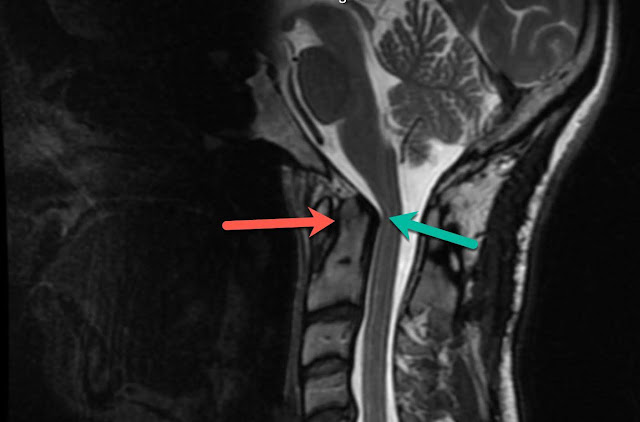
But he also pointed out something really interesting: an old fracture at C2. Of course we can't prove it to be true, but given that my whiplash bike accident was the event that started this all, causing severe ligament damage and instability at C1/C2, we have to assume that I did indeed break my vertebrae when I hit that tree. You can see the lighter line that runs horizontally across the top of my second cervical vertebrae, in between the arrows. It blows my aching mind beyond belief... of all the expert eyes that have seen this imaging over the last 10 years, not a single doctor or radiology report has identified the fracture. How is that even possible?

The good news is that the fracture has healed well so he doesn't think it's causing any issue, but interesting to note nonetheless. And other than that, he didn't really have other insights or recommendations, aside from an implanted neurostimulator. I think I've written about these before, probably before my occipital nerve surgeries. Essentially, this consists of a neurostimulator device implanted under the skin with wire leads that deliver electrical pulses to the epidural space near the spine. You control the impulses with a handheld device, with the goal of controlling pain by disrupting the pain signals that travel between the spinal cord and brain.  

I've learned to never say never, and if you've been around here long enough, it's fairly obvious that I'll cut open any part of my body wide open if there's a chance it could help my head. But, from the research I've done and the experiences I've had with nerve stimulation, I'm just not convinced right now that this is the right path to pursue. 

More therapies and procedures 

Back in April, Craig and I consulted with a physical therapist, Dr. Turner, of Texas Migraine Clinic. We really liked Dr. Turner. His approach to cervicogenic migraines targets the cervical spine at lower levels than most doctors. In his experience, he's found C5/6, C6/7 as primary pain generators. So he led me through a series of simple (and supported) cervical extension movements with the goal of basically "milking" the disc forward to alleviate irritation of nerves traveling up the brainstem. I tried the exercises for a period of time but unfortunately, didn't experience any shift in pain. If anything, my pain spiked. As it does. 


Now on to the interventional procedures I've had with Dr. O'Connor since March. 

The day after my last post, I had an occipital nerve block. This was one of those desperate "let's triple check this just in case" procedures. As I explained before, the only real substantial relief I've ever had from a procedure, whether diagnostic or therapeutic, were my ON blocks with Dr. Peled in San Francisco prior to my first decompression/excision surgery in 2017 (even though the surgery itself did not help). This time around, the blocks provided no relief. But I guess worth trying, right?

On that note, we are planning to fly back to San Francisco this summer to try another round of blocks with Dr. Peled. Craig and I spoke to him a few weeks ago just to pick his brain about all that's going on. We both just can't shake the fact that I responded so well to those injections. 

He recommended a few things: 

First, that I try a scalene block. If there is nerve pain being generated by my brachial plexus, this has some potential to help. If brachial plexus sounds familiar, it's because that's actually one of the spots Dr. Centeno is planning to reinject my stem cells into when we FINALLY are able to get back to Grand Cayman. (Side note update on that: they're hoping for September reopening). I've never had a scalene block before though, so I am (of course) on board to try. 

Next, that we try finding another peripheral nerve target to treat. Dr. Peled explained that in about 10% of patients he operates on, he finds an aberrant lesser occipital nerve branch located next to the trapezius muscle (vs. behind sternocleidomastoid). As a reminder, he decompressed my lesser ON in the first surgery, but there's a chance I could fall into that minority group. I think it's at least worth having him block my lesser ON just to see how I respond. 

Okay, back to Dr. O'Connor. Man, I am really all over the place right now. But my head feels like it's going to absolutely explode right now so I think this is the best we're gonna do. 

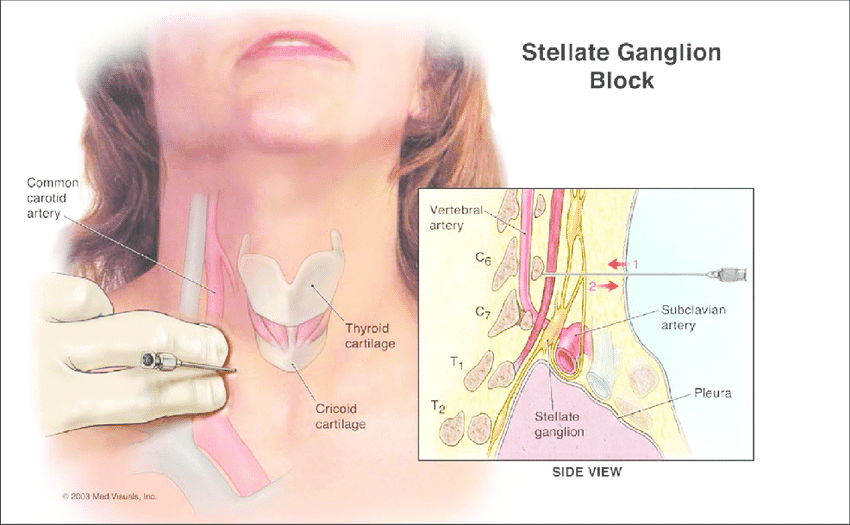
Next on tap with Dr. O'Connor was my first stellate ganglion block. The stellate ganglion is a collection of sympathetic nerves found anterior to the neck of the first rib. It provides most of the sympathetic innervation to head, neck, upper extremities, and a portion of the upper thorax. Blocks are often used to diagnose or treat a variety of circulation problems or nerve injuries, including complex regional pain syndrome (CRPS) and different types of neuropathic pain disorders. They're even used to treat PTSD, which is pretty fascinating. 


This was my first nerve block performed face up on the table. The doctor inserts a needle into your neck (on one side of your voice box) and injects a local anesthetic. Then under x-ray guidance, they use a second needle to precisely inject an anesthetic medication. For the rest of the day, it's common to experience things like a temporary droopy eye (which happened after my first) or arm numbness (which happened after my second). The most significant relief should come in a relatively short window following the procedure. 

This Friday, I'll go in for my fourth SG block (first right, then left, right again, and now left). I had a little bit of pain reduction from the first two, more so on the left side, but nada from the third. Ideally, we'd love for the relief to build on itself, but that doesn't really seem to be happening so far. 

Interestingly, when I lay down on the table for my second SG block and Dr. O'Connor instructed me to turn my head to the right, he was pretty taken aback by the rigidity of my sternocleidomastoid. It's all very normal to me because all the muscles of my neck are always so tight, and coupled with compromised mobility from my fusion, tension is just what I'm used to feeling. But it made him think that it may be worth trying to inject some Botox into those SCMs. Most people know it's used for migraines, but Botox is also a common treatment for cervical dystonia, or spasmodic torticollis. It works by preventing nerves from releasing acetylcholine, which prevents your nerves from sending messages to your muscles telling them to contract or spasm. 

I've had Botox injected pretty much everywhere else on my head (aside from the places where wrinkles appear, hah!) so I was immediately on board. Right now, we're just waiting for my insurance to approve it. They like to deny every procedure I have (every. single. one.) which means each one has to go through an appeal process before getting scheduled. If you live in chronic pain, you know the struggle. 

NYC for a Brain Scan 
To continue chasing down any central contribution to my pain (central sensitization/CRPS), Craig and I will be traveling to New York city next week so I can have a qEEG assessment.A few months ago, we were introduced to a neuropsychologist who has worked with many post-concussion/TBI patients/chronic pain patients. The brain mapping that I'll have done will measure electrical activity in different areas of the brain.  From there, neurofeedback can be utilized to up or down-regulate areas of the brain that are over or under-active. We’ll learn a lot more when we’re there about the assessment and interventions that can be used to help normalize anything that's out of balance. So I'll definitely be writing more about that soon.

Thoracic Outlet Syndrome 

Lastly, I wanted to share a little of my appointment yesterday with Dr. Broussard, a thoracic surgeon who specializes in Thoracic Outlet Syndrome (TOS). I haven't talked about TOS before, as it's something I've really only explored recently. If you're not familiar, TOS is a condition involving compression of the nerves or blood vessels that pass through the base of the neck. It's typically characterized by disabling pain in the neck and shoulder, along with pain, numbness, tingling, and weakness in the hands and fingers. This obviously doesn't exactly line up with my condition, but over the last few months, I've developed increasing nerve pain down my left arm. The pain is very much connected to what's going on in my neck and up the left side of my head. As my head pain spikes, the nerve pain also increases. So I started researching a little more. 

There are three types of TOS: Arterial (compression of the axillary-subclavian artery), Venous TOS (compression of the axillary-subclavian vein) and Neurogenic TOS, or nTOS, (compression of the brachial plexus nerves). I learned that whiplash can also be a cause of nTOS (really any injury that results in chronic cervical muscle spasm). So I started to really wonder if there is a compression in my brachial plexus that's driving pain. (And remember Dr. Peled's suggestion to try a scalene block to target the brachial plexus? And Dr. Centeno's plan to inject my stem cells into my brachial plexus?)

So Craig and I went to see this surgeon here in Phoenix, who happens to be a very well-respected surgeon in the TOS world. And he was wonderful. He spent a solid 90 minutes with us, talking through my history (which is, as you can imagine, a bit of a doozy). He walked us through his diagnostic algorithm, explaining that although nTOS is the most common, it's also the hardest to diagnosis. It starts with a clinical diagnosis to determine whether next steps are warranted: first a dynamic CT angiogram to check for compression and anterior scalene hypertrophy, then Botox injections (under guidance) of anterior scalene and pec minor. From there, surgical options are weighed. Surgical treatment of TOS consists of first rib resection to alleviate compression. 

In terms of the headache/TOS connection, Dr. Broussard explained that he does see a connection with occipital headaches, but not as much with pain in the frontal region. On the whole, nTOS symptoms are generally just more distal than central, which was leading him to think it really wasn't an underlying issue for me. I experienced very little reproduction of symptoms during the physical exam (upper extremity tension testing was really the only portion I showed positive signs for), which made him think that additional testing, at least at this time, probably just doesn't make sense. 

I felt a mix of emotions leaving his office. Relief, I guess, to eliminate a diagnosis that doesn't necessarily have the easiest pathway to recovery. But also defeat. It's disheartening to be told (even by the most compassionate of doctors, like Dr. Broussard) that he can't help you. 

But, I'll continue focusing on what's ahead. Hopefully these next few months will bring some new insights and positive treatment outcomes. As Ryan likes to say when she takes a spill on her Strider bike (before I can even ask if she's okay)...

"I get back up." 


Thanks as always for reading! 

Monday, March 8, 2021

Head Update March 2021

Hello friends and strangers. It's been a while, as it always is. But thank you for checking back in, or perhaps landing here for the first time, in your own fight for freedom from chronic head pain. I know these last twelve months have rocked pretty much everyone's worlds in all kinds of unprecedented, unfathomable ways. And if you live with chronic and unrelenting pain, the hill you climb every day is still the hill you climb every day. I'm sure many of you have spent this year climbing it with fewer resources, less treatment, less support, less hope. So even if the answer to your (our) pain still doesn't feel within reach, here's to hoping that it can finally start to feel just a little more possible. 

I figured I'd go through some updates, bullet point style. Spoken like a real, time-starved and just a little bit exhausted toddler mom, am I right? These are in (mostly) chronological order since early December. 

  • Stem cells: The February update from Regenexx Grand Cayman is that the island is continuing with a cautious, phased reopening of their borders. The next stage is contingent on first having 90% of persons over the age of 60 vaccinated. Once that objective is achieved and borders are reopened, Dr. Centeno's office will be able to reopen (hopefully later in the year). So, my stem cells are still there, safely sitting in cryopreservation storage. Though I prefer to envision them lounging in the warm sand with little umbrella drinks, waiting patiently for me.
  • Z Health: I had mentioned before that I was starting some "neurocentric" rehabilitation with a Z-Health practitioner. After my initial evaluation, I was prescribed a series of vestibular exercises (along with some specific breath work). VOR, or vestibular ocular reflex (think gaze stabilization) is used to retain the eyes, inner ear, and brain to work together after head injuries. I think there's certainly a lot of value in this approach, and I stuck to my daily rehab for about a month or so but honestly wasn't experiencing any change in symptoms. 
  • Postoperative pain flare: In early December, I had a septoplasty to correct a deviated septum from an old soccer injury. When I was sixteen, I headed an opponent's head instead of the ball (oops) and quickly watched my beautiful cleats turn from white to red. I drove myself to the ER and cried every time I looked in the rearview mirror because of how crooked my nose looked. Hah! It only needed a surgical manual realignment at the time, but my nasal breathing has never totally recovered. Not a huge deal, but over the years, as I've tried different breathing techniques to help manage my head pain, my compromised nasal passageways had become more glaring. 

If you're not familiar with the benefits, nasal breathing has a few advantages over mouth breathing. Essentially, it allows for more oxygen to get to active tissues, as nasal breathing releases nitric oxide. Nitric oxide is needed to increase CO2 in the blood, which is what releases oxygen. So when you're constantly breathing through your mouth, your body's cells simply aren't getting as much oxygen. And when your body is under a constant state of stress (hi, chronic pain!), you're really just making a tough situation worse. So, I figure now was as good a time as any to have my deviated septum corrected. I may not take things as far as my freak-of-nature husband and go for mountain bike rides or perform versa climber sprints with my mouth closed, but at least I can breathe more easily.

The reason I'm even bothering to bring this up is that I experienced an incredibly severe head pain response to surgery. I felt fine immediately after (as in, normal-high headache) but as the night went on, it began to spike, reaching a really out of control, truly scary level of pain. This seems to be a pattern when my body is undergoing any kind of additional trauma. It happened during my Topomax-induced kidney stone "vacation" to Mass General in 2015 and during my unmedicated labor with Ryan (and to a slightly lesser degree, during a bout with mastitis during my early days of breastfeeding). Unfortunately, pain at this level has been as unresponsive to medication as any level below it. Otherwise, I'd of been in the ER in a heartbeat. 

  • Interventional procedures: In my last post, I mentioned that I'd be starting a few rounds of cervical epidurals with Dr. O'Connor at AZ Innovative Pain. This is an injection of a steroidal anti-inflammatory under x-ray guided fluoroscopy into the epidural space that surrounds the nerves at the junction of C7-T1, which then disperses throughout the cervical spine. The initial plan was to do three of these, a few weeks apart. But after zero response to the first two, we decided a third wasn't warranted. So where the heck to go from here? After chatting with Dr. O'Connor last week, we decided to pivot in a different direction: occipital nerve blocks.

If those sound familiar, it's because I've had occipital nerve blocks before (quite a few times actually). In all these years, the only real substantial relief I've ever had (from a diagnostic or therapeutic procedure) was the occipital nerve blocks with Dr. Peled in San Francisco, which confirmed my candidacy for my first occipital nerve surgery in 2017. Granted, I didn't get relief from the surgery itself, a decompression of my left and right greater occipital nerves, decompression of my right and left lesser occipital nerves, and excision of my right and left third occipital nerves. We have no idea why that surgery, and the next one just a few months later - excision of my left lesser occipital nerve - didn't provide lasting relief. All I know is what I felt after the preoperative diagnostic blocks. And out of sheer desperation today, that's what I'm chasing...because what choice do I really have? So I'll head back to the surgery center tomorrow for my first round of ON blocks. We'll see how I respond and go from there.

Dr. O'Connor also just referred me to a local neurosurgeon for a second (or 132nd?) opinion. Given the nature of and complexity of my case, and given that I haven't seen a neurosurgeon since my neurosurgery in FL in 2015, we all agreed this would be a valuable step. I should be seeing Dr. Abdulhamid at Royal Spine Surgery soon.

  • CrowdMed:  Earlier this winter, I submitted my case, in all of its exhaustive detail, to CrowdMed. Crowdmed is basically a crowdsourcing tool for complex medical conditions. As the patient, you answer questionnaires that cover your personal story, medical history, current symptoms, etc. and medical detectives with a broad range of expertise can weigh in. One physician agreed that there was likely a central sensitization component to my pain at play (which is probably accurate) but that was really the extent of takeaways. Even though it didn't amount to a whole lot for me, I wanted to share it here because I do think there's a lot of merit to the concept. If you're suffering like me and would do anything for help, you've got to cast as wide a net as possible.
  • Brr. Cold water immersion is something I've done periodically over the years, but never on a super consistent or regimented basis. I'd hop in the cold plunge at EXOS after a workout (prior to getting pregnant) or do some contrast therapy here and there, but over the last few months, I've gotten into a solid routine here at home. Why do I put myself through this, you might be wondering? Simply put, cold water immersion is regulation training. You're trying to improve the flexibility of your autonomic nervous system, which is really useful for people who spend the majority of their day in sympathetic-dominant scenarios (chronic pain!). By submerging your body in frigid temperatures, you induce a fight or flight response and your body is forced to react against it. Your breathing normalizes over time (fairly automatically, believe it or not) and it gets easier and easier each time you take the plunge. 
Through the winter, I was able to get away with using our pool, which stays in the high 30s to mid 40s, but as the season shifting and the pool's warming up, I've moved to the homemade cold plunge Craig had installed a few years ago. I go in for just two minutes every morning (you can do anything for two minutes). I'm a super early riser - up by 4:10, workout done by 5:15, out of the moon-lit cold plunge and into the shower by 5:20. I know it seems nuts to a lot of people, but when I wake up each morning already engulfed in pain that gnaws at my body and brain with every passing hour of the day, this routine is my way of taking control. I might feel knocked down again and again, but I need to at least start standing up. 

It'd be a big stretch to say the cold provides pain relief, but some days I do feel like it can give me a little extra breathing room.  


  • Neurology check-in: At the end of the year, Craig and I hopped on a phone call with my long-time neurologist from the Mayo Clinic, Dr. Dodick. Even though I haven't had any real success with some of the more conventional migraine protocols, we're grateful to have had Dr. Dodick in our corner through the years. He's one of the leading headache and migraine researchers in the world, on the bleeding edge of innovation that is shaping the landscape of migraine treatment. I know this is the case in many other areas of medicine too, but I find it quite remarkable how many treatment options have emerged just in the last eight years I've been under his care. 
From the noninvasive wearable or handheld modalities I've tried like the Cefaly, vagal nerve stimulator, and transcranial magnetic stimulator, to calcitonin gene-related peptide (CGRP)-blocking antibodies, the technology has come so far. And when you live in unresponsive chronic pain like I do, constantly toeing the line between utter hopelessness and cautious optimism, that's the stuff that gives you real, tangible hope. Because Dr. Dodick is on the frontline of this research, helping to get these treatments FDA-approved and accessible to patients like me, he's been able to share updates with me and Craig in real time too. Anecdotal information like "this device is so far just approved for the use of cluster  headaches ... BUT we've been seeing that it's also helping chronic daily headache so it might be worth it for you to try..." (as an example).  

So a few interesting takeaways shared on this recent call:  

We chatted with Dr. Dodick about the vestibular component of my pain. "Dizziness" has never been a primary complaint for me (I'm lucky that I don't deal with debilitating vertigo, as that is a beast on its own. But, as discussed in my last post (and the reason I was trying the Z Health rehab), there is obviously a reason I get dizzy when turning my head left to right more than two or three times. He agreed this stems from my original injury. Hitting that tree was a vestibular insult, leaving my system highly vulnerable to equilibrium changes. It therefore makes perfect sense that changes in visual input (via the vestibulo ocular pathway) and input from the neck (via the vestibulospinal tract pathway) can still have a profound effect on my symptoms.  

We asked Dr. Dodick what he thought of the red spots that sometimes develop on particular "spiked" pain days. (See photo below). His take was that the blotchiness was likely indicative of reflex sympathetic dystrophy, or more commonly referred to as complex regional pain syndrome (CRPS). Basically, this is autonomic nervous dysfunction (no surprise there). When you sustain an injury, your sympathetic nervous system tells your blood vessels to constrict to prevent blood loss and then later, to open back up so that the damaged tissue can be repaired. But with CRPS, your poor sympathetic nervous system gets mixed signals. Even though the injury is over and done with, that message is never received. It's the reason why amputees can experience phantom limb pain. It's almost unbelievable, but it's a horribly real thing. (Pain happens in your BRAIN, so you can still feel pain in your left leg even if you've lost your left leg). CRPS is treated with pain relievers, anti-inflammatories, anti-depressants, steroidal injections, even intravenous ketamine infusions. And those are all things I've already done, so it doesn't really change a whole lot for me. Just interesting. 


On the modality front, Dr. Dodick recommended I try a new remote electrical neuromodulation device called Nerivio, which recently gained FDA approval for the acute treatment of episodic or chronic migraine. My pain is 24-7, which makes it hard to treat in acute manner (think taking an abortive drug when you feel a migraine "coming on") but Dr. Dodick thought (and we agreed) that it couldn't hurt to try. The Nerivio works by engaging a descending pain inhibition network in the body. It's just an arm band that feels kind of like a tens unit and you control the intensity from an app on your phone. So I gave that a shot but didn't experience any relief. 

We revisited a conversation we've been having over the last couple of years around calcitonin gene-related peptide (CGRP)-blocking antibodies too. As I mentioned before, these therapies are already considered transformative in this field of medicine, and it's early days still. Monoclonol antibodies are designed to target a single protein or receptor that's responsible for transmitting pain signals during a migraine. When they enter into the body, they break down into their amino acids. Unlike other drugs, they don't get metabolized by the liver, they don't attach to other proteins, and they don't target other stuff along the way, which means that the side effects (especially compared to traditional migraine meds) are so minimal. 

If you've been here for a while, you know I'm not your run of the mill migraine migraine patient, so as exciting as some of these breakthroughs are, they don't always mean a whole lot for me. But Dr. Dodick explained that CGRP trials are now underway for acute, subacute, and chronic post-traumatic headache (hey that is me!). The only reason we haven't gone down this path before is that in the time since they've gained approval and come to market, I've been undergoing fertility treatment, and then have been pregnant, and am now still breastfeeding - all of which are contraindicated. As soon as that's not the case, I'll most certainly be starting. Dr. Dodick has recommended an IV version, as bioavailability is 100% whereas the self-administered monthly shots are only about 50%. 

We also discussed some additional research he's been doing with post-concussion syndrome. He recommended I try supplementing with N-acetylcysteine (NAC) ( 600mg 1-2/day), which I've been on now for a couple of months. NAC is a precursor molecule to our body's main antioxidant, glutathione. It's been studied in traumatic brain injury patients for its neuroprotective and mitrochondrial boosting benefits. 

Along the same lines, we talked about the potential therapeutic benefit of nictotinamide riboside, a precursor to NAD+. If you're not familiar, NAD+ (which stands for nicotinamide adenine dinucleotide) is a coenzyme of vitamin B3 (niacin). It's naturally present in every cell in your body and its main role is the transfer of electrons from one molecule to another. Simply put, it's what FUELS metabolic reactions, driving your cells to metabolize carbohydrates, fats, and amino acids for energy. Thorne makes a product called ReveraCel that combines nictotinamide riboside with a few other things so he recommended I try that too (which I also have been now for a couple of months).

It's clearly advantageous to boost NAD+ (Dr. Dodick is even working with Thorne to develop a product containing both nictotinamide riboside and NAD to help treat post-concussion syndrome) so we asked about NAD+ infusions. NAD+ is currently used therapeutically to treat a host of different age-related, inflammatory, autoimmune, and neurologic conditions. It's even used in addiction recovery because of its ability to aid in the regeneration of opiate receptors, which is pretty fascinating. It's most beneficial when administered intravenously, sending a high dose of the compound directly into the bloodstream. He wasn't aware of any research with this kind of chronic pain, specifically, but agreed it wouldn't hurt for me to try. If mitochondria make energy and NAD+ can optimize the function of my mitochondria, seems worthwhile in my book. So I'll be going to my naturopath for my first 90 minute infusion on Thursday. The plan is to do at least three.

  • Shockwave Therapy  

As time has gone on, it can feel increasingly difficult for me to start working with new practitioners. It's overwhelming to start from square one, and honestly just hard for me to even find clinicians who offer something more or different than what I've already tried over and over and over again, But when I was referred by a friend and highly respected expert in the field to Shawn Robeck, DC at Fix Body Group I knew it was worth a fair shot. We started working together with a focus on just restoring some function back to my cervical spine. Along with manual work and a few other modalities I've been treated with in the past (like ARP wave and traction), he started using a tool that was new to me: Shockwave. This is what the unit looks like below. It's essentially a wand that uses a mechanical pressure wave, which is transferred to the body by an applicator head and which radiates outs in the tissue. That mechanical stress triggers reactions in the tissue that should promote healing. If you're familiar with the mechanism of prolotherapy or platelet-rich plasma therapy, it's very similar. You create trauma in a specific area to force the the body into healing. Shockwave therapy is NOT comfortable, especially in certain areas like the ridge between my occipital and parietal bones, where we've focused on breaking up adhesions. It kind of feels like someone is drilling into your skull. But it's also a good kind of pain, as only someone in chronic pain can understand. 


In the first few weeks working with Shawn, it seemed like I was actually experiencing some shifts in my pain, along with improved mobility in my c-spine. In fact, I even had a week in late January (and ENTIRE WEEK) of lower-than-normal head pain. It may not seem significant, but that was f-ing remarkable. That relief has been difficult to replicate, which is incredibly frustrating, but we're keeping at it for now. 

  • Red Light Therapy

One of the perks of Craig's career is that he himself is highly knowledgeable in a lot of these less conventional therapies, or well connected to those who are. So recently we were connected with a company called LightStim, whose products combine therapeutic light energy with patented technology to aid in the body's natural recovery process. In the same way that plants absorb light energy from the sun, these devices deliver different wavelengths of light energy to help increase local blood circulation and relieve pain. We have this bed at our house right now, which I'm trying for a couple of months. I go on it every day for 40 minutes (20 front and 20 back). I haven't noticed any changes as of yet, but will report back. 


Phew. That was a lot, but I think that about covers it for now. I try so hard to stay positive. It's easier said than done but I know that ultimately, the quality of my own life will depend as much on how hopeful I chose to be as it does a number on the pain scale.

I was listening recently to some parenting podcast all about teaching kids resilience skills. "Resilience" is kind of one of those buzzwords that gets tossed around, but there was this one line about what it is and what it isn't that struck me. Basically that resilience isn't the ability to persevere through challenge but the ability to take stress and pain and to use it to your advantage; to grow from it in a purposeful way. They talked about how resilient people are good at finding pause to problem solve. This was all in the context of raising good humans, of course, but at the very least, this will be what Ryan can learn from her mama. (I can only hope that my chronic pain lens will help me be a better parent as much as being a parent has helped me live in chronic pain). 


SITE DESIGN BY DESIGNER BLOGS